Is Quiapo
worth it?
Quiapo is the loudest, densest, least sanitised hour available in Manila: a basilica full of people touching the Black Nazarene, herbalists and amulet sellers spread across the plaza, a camera-repair street, and a market that starts where the pavement ends. It costs nothing and it is not a comfortable sight — the crowd is genuinely thick and the pickpocketing is real. Friday is devotion day and the most intense. Go between 9am and 4pm, take a guide if crowds unsettle you, and carry nothing you would mind losing.
What to expect in Quiapo
This is the part of Manila that has nothing to do with malls, and the part most visitors are quietly told to avoid. It rewards anyone willing to pay attention.
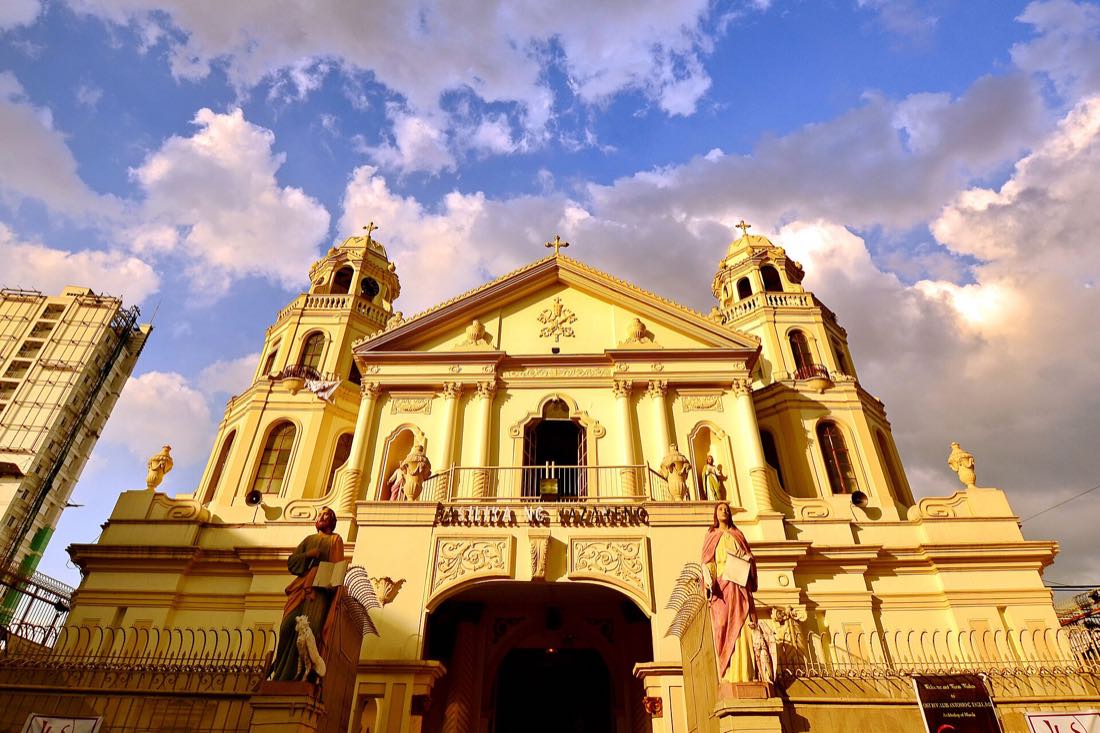
The Minor Basilica of the Black Nazarene is the centre of it — a dark 17th-century image of Christ carried from Mexico, believed by millions to be miraculous. On 9 January the Traslación hauls it roughly 6km through the old city over 15 to 21 hours with crowds in the millions; it is the largest religious event in the country and not a spectator sport. On an ordinary day the church is simply full, at all hours.
Around the plaza: stalls selling herbs, oils, candles and amulets, and vendors offering fortune-telling and folk remedies in the shadow of the basilica. It is one of the frankest displays of Catholic-animist syncretism anywhere.
Hidalgo Street is the camera district — secondhand bodies, repairs, and film. Villalobos and the streets toward Quinta Market are dense wet-market territory.
The honest caution: this is the highest-density pickpocket environment on this website, along with Divisoria. Nothing in your back pockets, bag in front, phone away. Beggar syndicates work the church gates. Give food rather than cash, or give through a vetted charity.
Is Quiapo for you?
Quiapo, practically
Going with a guide
Quiapo is the one district on this site where a guide changes the experience rather than just the logistics — a local can explain the herbal stalls and the devotion, and takes the edge off the crowd.
Quiapo FAQ
Is Quiapo safe for tourists?
In daylight and with sensible precautions, yes — it is a busy district full of ordinary people going about their day, not a no-go zone. But it is the densest pickpocketing environment in this guide: keep your bag in front, nothing in back pockets, phone out of sight, and do not go wandering after dark.
What is the Black Nazarene?
A dark wooden image of Christ carrying the cross, brought from Mexico in the 17th century and believed by millions of Filipinos to be miraculous. It lives in Quiapo Church, and every 9 January the Traslación procession carries it about 6km through Manila over 15–21 hours, drawing crowds in the millions.
What day is best to visit Quiapo?
Any weekday between 9am and 4pm for a manageable version. Friday is devotion day and the church and plaza are at their most intense and most interesting — go then if the crowd is the reason you came. Avoid 9 January unless the Traslación itself is your purpose.
Is Quiapo worth visiting?
If you want to understand Manila rather than photograph it, yes — nothing else in the city shows you popular Catholicism, folk medicine and street commerce packed into three blocks. If crowds and noise wear you out, skip it and do Binondo instead, which delivers a gentler version of the same energy.