Is Rizal Park
worth it?
Rizal Park is free, patrolled, open 5am to 9pm, and sits directly between the three free National Museums and Manila Bay — which makes it the connective tissue of a morning rather than a destination. Come for the Rizal Monument and the marble markers showing where the national hero was shot in 1896, give it 45 minutes, and spend the real time in the museums. In the evening the dancing fountain runs and families take over. It is also where Manila's big political rallies happen — peaceful, scheduled, and worth walking past rather than avoiding.
What is actually in Rizal Park
Fifty-eight hectares of lawn, monuments and gardens between Intramuros and Manila Bay — the country's civic front room rather than a sight.
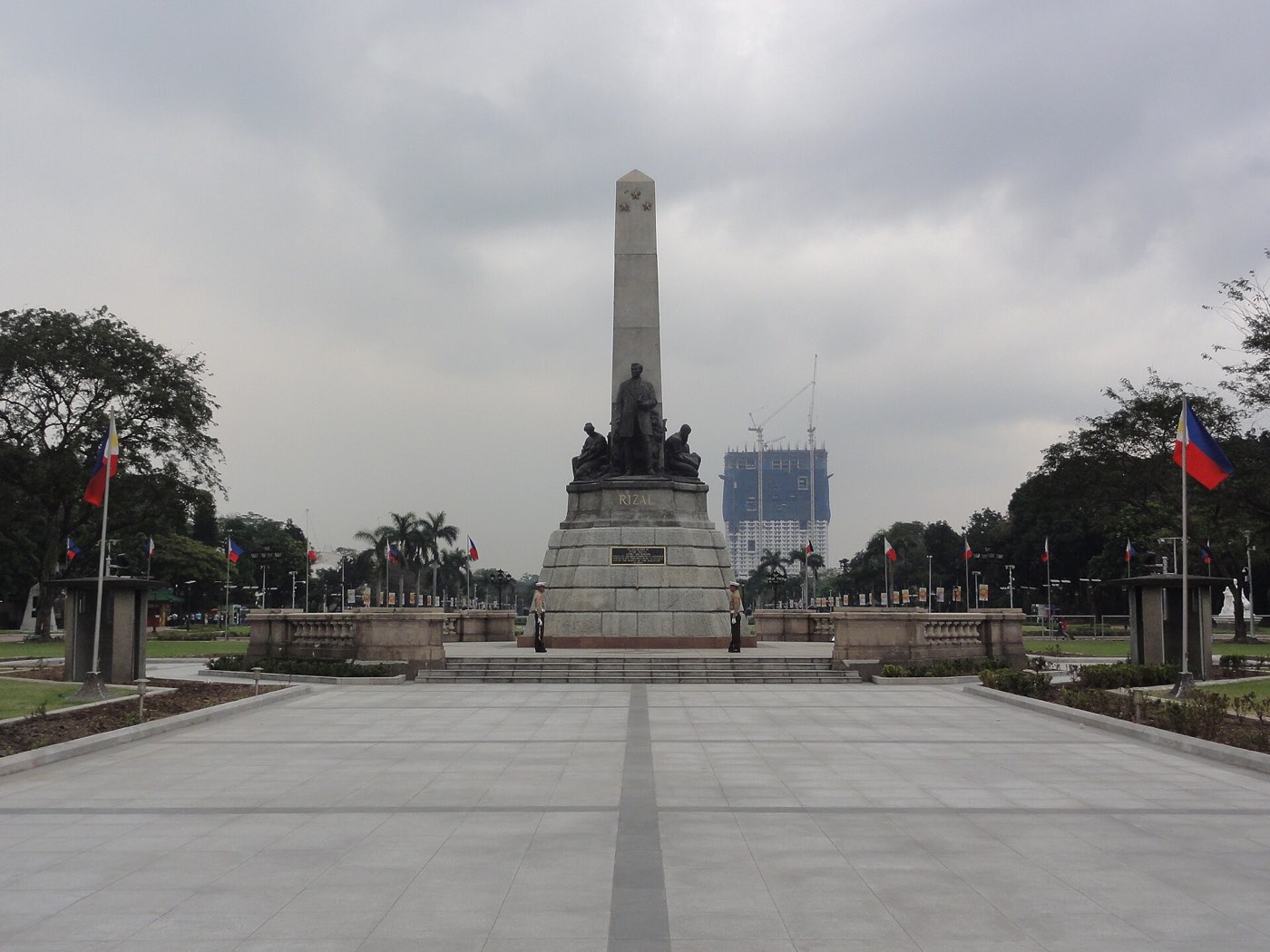
The Rizal Monument is the centre of it: an honour guard, the hero's remains beneath the obelisk, and Kilometre Zero for the whole Philippine road network. A short walk away, a set of bronze figures and marble markers reconstruct the spot where Rizal was executed by firing squad on 30 December 1896 — the same man whose last night you can visit in Fort Santiago, ten minutes north.
The Quirino Grandstand at the bay end is where presidents are inaugurated and where the Trillion Peso March protests of 2025–26 gathered roughly 50,000 people. Rallies here are scheduled, localised and peaceful; visitors walk past them without incident. Mendiola, a few kilometres away, is the one address to avoid on a big protest day.
Chinese and Japanese gardens (small entry fees), a relief map of the Philippines, an orchidarium, and a dancing fountain that runs on evenings fill the rest. None of it is remarkable; all of it is pleasant at 6pm.
Immediately west is Baywalk and the dolomite-sand beach — a free sunset stroll, permanently controversial, and closed to swimming.
Is Rizal Park for you?
Rizal Park, practically
Rizal Park FAQ
Is Rizal Park worth visiting?
As part of a morning that includes the three free National Museums and Intramuros, yes — it is the 45-minute link between them and it costs nothing. As a standalone destination it is an ordinary large city park, and travellers who go specifically for it are usually underwhelmed.
Is Rizal Park safe?
The park itself is patrolled and safe in daylight and into the early evening, when families fill it. The Taft Avenue edge and the streets around it are where phone-snatching gets reported after dark — take a Grab from the gate rather than walking to the LRT late.
What are the Rizal Park opening hours?
5am to 9pm, every day, free. Early morning is when locals use it for tai chi and running; the dancing fountain and the crowds arrive after 6pm.
What happened at Rizal Park?
José Rizal was executed by firing squad here on 30 December 1896, an event that helped ignite the Philippine Revolution. Bronze figures and marble markers reconstruct the scene near the monument, which also holds his remains and marks Kilometre Zero of the national road network.